
Academy · Intermediate
Peptide Reconstitution Guide
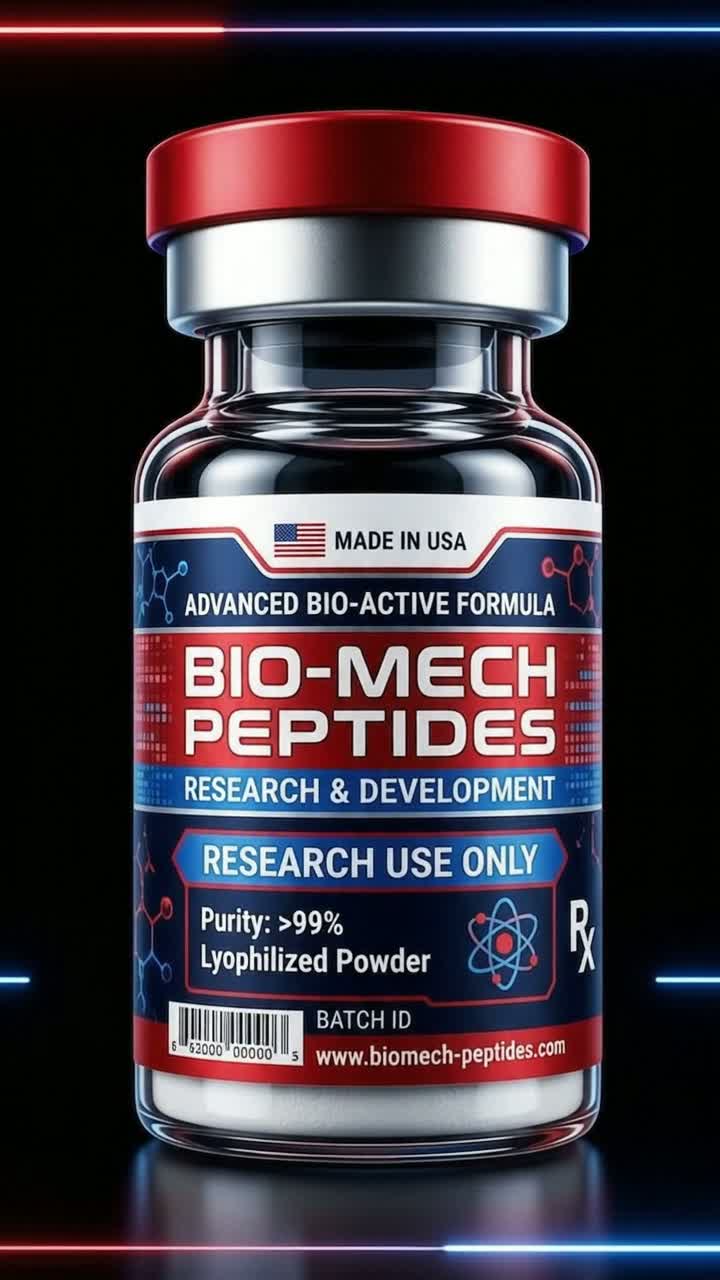
Laboratory handling reference for lyophilised research peptides: supplies, aseptic technique and storage.
Supplies
Sealed vial of lyophilised peptide, bacteriostatic water (0.9% benzyl alcohol), calibrated pipette or graduated measuring device, alcohol wipes, and a clean working surface.
Reconstitution procedure
Wipe both stoppers with alcohol. Draw your target volume of bacteriostatic water into the syringe. Add it down the side wall of the peptide vial slowly — never directly onto the powder. Swirl gently to dissolve. Do not shake. Refrigerate.
Concentration math
Concentration = peptide mass ÷ reconstitution volume. Example: 5 mg peptide ÷ 2 ml water = 2.5 mg/ml. Record the concentration on the vial label.
Diluent choice: what the options actually do
Bacteriostatic water — sterile water with 0.9% benzyl alcohol — is the default vehicle because the preservative keeps a multi-use vial usable across repeated draws from the same vial. Sterile water without preservative is appropriate for single-use preparation where the entire contents are used immediately. Acetic acid solutions serve sequences that dissolve poorly at neutral pH; the choice between vehicles comes from the reference method for the compound, not from preference.
One mechanical point causes most reconstitution problems: solvent should be directed down the vial wall rather than streamed onto the powder cake, and mixing should be a gentle roll or swirl rather than shaking. Foaming and shear stress are the enemies of peptide solutions; patience is the cheapest instrument in the protocol.
Concentration arithmetic without the guesswork
The relationship researchers need is simple: concentration equals mass divided by volume, and every practical decision — how much solvent to add, what a draw contains — follows from it. The reason it still goes wrong in practice is unit drift between label conventions, which is why the reconstitution calculator works in milligrams and millilitres only, with a visual syringe showing where the plunger should sit on a 1 ml syringe.
Two habits keep the arithmetic honest. First, work from the actual batch certificate's net content, not the nominal label value — residual water means they can differ slightly. Second, decide the target concentration before opening the vial, and add the calculated volume in one motion; incremental additions multiply measurement error.
Frequently asked questions
Sterile or bacteriostatic water?+
Bacteriostatic for any solution stored more than 24 hours. Sterile water is acceptable for single same-session use.
Can I reconstitute directly in the original vial?+
Yes — that is the standard practice. Add solvent down the inner wall, swirl gently, and let the solution clear before drawing. Do not shake, and do not mix batches in one vial.
Related reading
Order in 3 steps · tracked delivery
Order research peptides for your laboratory
Batch documentation is provided on request — no laboratory reports have yet been verified for publication against Bio Mech stock. Dispatch is tracked on every order; allow 5–18 business days once tracking is active. Supplied for in-vitro research use only.
- 1
Choose your compound
Browse the catalog or search for a specific reference standard.
- 2
Checkout in 2 minutes
Bank transfer or card — the full price is shown before you pay.
- 3
Tracked dispatch
Tracking on every order; 5–18 business days once tracking is active.
Most ordered this month
BPC-157
From €269.00
Ipamorelin
From €249.00
Bacteriostatic Water
From €149.00
- Research use only — not for human consumption
- Tracked delivery to the USA, UK, Europe and the Middle East
- Batch documentation available on request
Research materials · Order information
Research only
Not for human consumption
Documentation
Ask about the specific batch
Tracked parcels
5–18 business days
Tracked Delivery
5–18 business days
Pay with Wise, Revolut, Monzo, bunq or bank transfer
- Card via Wise
- Card via Revolut
- Bank Transfer