
Lab protocol
How to Reconstitute Peptides — Step-by-Step Research Protocol
Reconstitution is the most common point at which research peptide work goes wrong. The protocol itself is simple, but small errors in diluent volume, technique or storage can ruin a vial. This page walks through the standard laboratory procedure step by step.
Reading this research reference
The information below concerns the research subject, not proof of the identity or performance of a supplied material. Check the original sources and your laboratory’s requirements; product documentation must be assessed separately for the exact batch.
What you need before you start
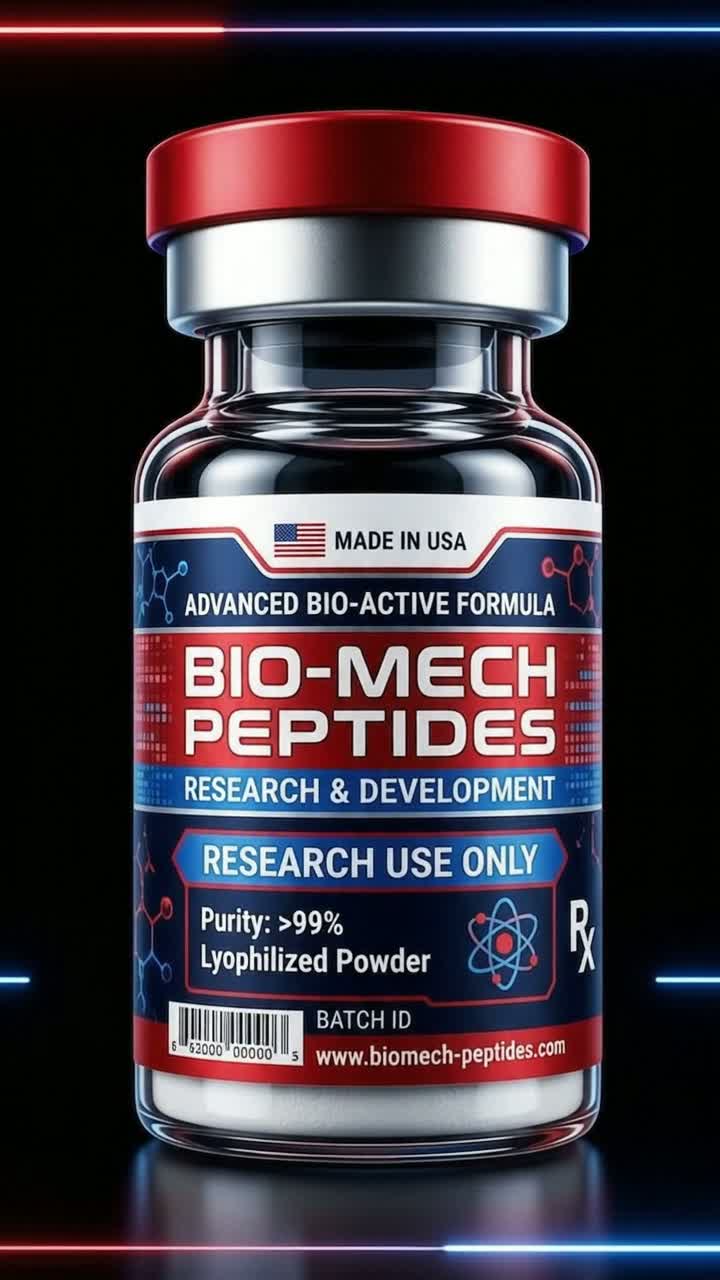
A vial of lyophilised peptide stored at 2–8°C, a vial of bacteriostatic water (BAC water) or sterile water, an appropriately sized sterile syringe with a fine needle, alcohol swabs, and the lot-matched COA for the peptide. The COA tells you the peptide mass in the vial — you cannot calculate concentrations correctly without it.
Step 1 — Choose your diluent
Bacteriostatic water (0.9% benzyl alcohol) is the standard diluent for most research peptides because it allows the reconstituted material to be used over several weeks under refrigeration. Sterile water can be used for single-use applications. Acetic acid solutions are used for peptides that are poorly soluble in water (e.g. some hydrophobic sequences). The peptide COA or supplier note should specify the recommended diluent.
Step 2 — Calculate the volume
Decide your target concentration first, then divide vial mass by concentration to get diluent volume. Example: a 10 mg vial reconstituted to 5 mg/mL needs 2 mL of diluent.
Step 3 — Add the diluent gently
Wipe both vial septa with an alcohol swab. Draw the calculated volume of diluent into the syringe. Angle the needle so the diluent runs down the inner wall of the peptide vial — do NOT inject it directly onto the lyophilised pellet. Force can damage the peptide.
Step 4 — Dissolve, do not shake
Once the diluent is in, swirl the vial gently or roll it between your palms until the powder is fully dissolved. Never shake a peptide vial. Shaking introduces shear forces and foaming that can degrade the peptide. Full dissolution should take seconds to a minute for most research peptides.
Step 5 — Label and store
Write the reconstitution date, concentration and lot number on the vial. Store reconstituted material at 2–8°C, away from light. With BAC water, most research peptides have an in-use stability window of around 2 months; sterile water shortens this significantly. Always follow the COA's stated window.
Common mistakes to avoid
Forgetting to factor in vial overage when calculating concentration; adding diluent directly onto the pellet; shaking instead of swirling; using room-temperature storage; leaving the reconstituted vial without a date label; reusing needles between vials. Any one of these can compromise a study.
Frequently asked questions
How do you reconstitute a peptide?+
Calculate your target concentration, draw the matching volume of bacteriostatic water, slowly add it down the inner wall of the peptide vial, swirl gently until fully dissolved, label with date and concentration, and store at 2–8°C.
What water do you use to reconstitute peptides?+
Bacteriostatic water (0.9% benzyl alcohol) is the standard diluent because it allows repeated access over several weeks under refrigeration. Sterile water is used when only single-use is needed.
Do you shake a peptide vial?+
No. Shaking introduces shear forces and foaming that can degrade the peptide. Swirl gently or roll the vial between your palms until the powder is fully dissolved.
How long does a reconstituted peptide last?+
With bacteriostatic water and refrigerated storage, most research peptides have an in-use stability window of around 2 months. Always follow the specific window stated on the lot-matched COA.
Can I freeze reconstituted peptides?+
Some peptides tolerate a single freeze-thaw cycle for long-term storage; many do not. Repeated freeze-thaw cycles degrade most peptides. Check the COA or compound-specific reference before freezing.
Continue your research
Compound storage guide
Laboratory peptides guide
Peptide Library
Browse the full HPLC-verified catalogue
Buy in Marbella
Tracked Costa del Sol delivery
Book a free consultation
20-minute call with the Bio Mech team
Lab reports & COAs
Batch-by-batch purity certificates
Research compounds overview
Laboratory peptides guide
Storage & reconstitution guide
Peptide glossary
Order in 3 steps · tracked delivery
Order research peptides for your laboratory
Batch documentation is provided on request — no laboratory reports have yet been verified for publication against Bio Mech stock. Dispatch is tracked on every order; allow 5–18 business days once tracking is active. Supplied for in-vitro research use only.
- 1
Choose your compound
Browse the catalog or search for a specific reference standard.
- 2
Checkout in 2 minutes
Bank transfer or card — the full price is shown before you pay.
- 3
Tracked dispatch
Tracking on every order; 5–18 business days once tracking is active.
Most ordered this month
BPC-157
From €269.00
Ipamorelin
From €249.00
Bacteriostatic Water
From €149.00
- Research use only — not for human consumption
- Tracked delivery to the USA, UK, Europe and the Middle East
- Batch documentation available on request
Research materials · Order information
Research only
Not for human consumption
Documentation
Ask about the specific batch
Tracked parcels
5–18 business days
Tracked Delivery
5–18 business days
Pay with Wise, Revolut, Monzo, bunq or bank transfer
- Card via Wise
- Card via Revolut
- Bank Transfer