
Hub · Storage
Peptide Storage & Reconstitution Guide | Bio Mech Research
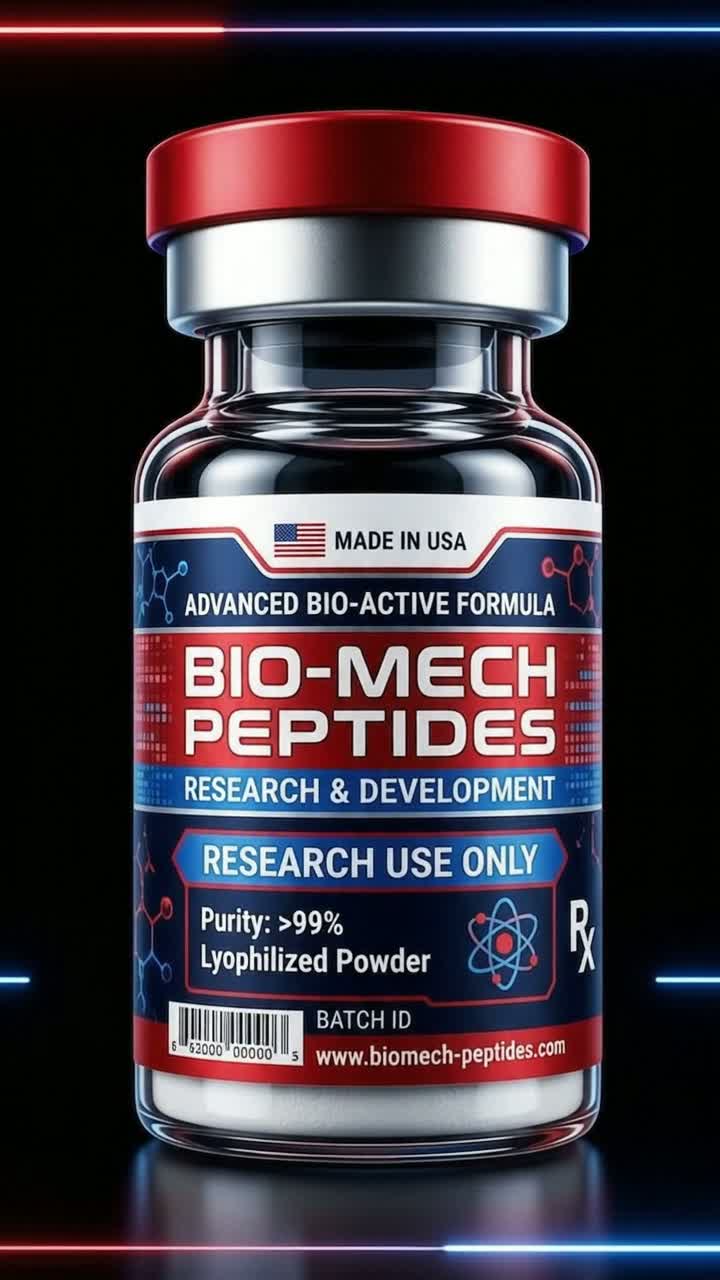
Storage and reconstitution reference for lyophilised research peptides — cold-chain, in-use stability and labelling practice.
Reading this research reference
The information below concerns the research subject, not proof of the identity or performance of a supplied material. Check the original sources and your laboratory’s requirements; product documentation must be assessed separately for the exact batch.
Lyophilised storage
2–8°C for short-term archive; −20°C for long-term. Keep vials upright, dry and away from light.
After reconstitution
Refrigerated, capped, with the reconstitution date and concentration written on the vial. Discard at the end of the COA's in-use window.
Labelling
Every vial should carry the compound, concentration, reconstitution date and lot number. Internal SOPs should govern transfer to working stocks.
Why moisture is the primary storage enemy
Lyophilised powder is stable precisely because it is dry; the moment it absorbs atmospheric moisture, both degradation chemistry and measurement problems begin. Hygroscopic sequences can take on water visibly — a formerly free-flowing cake that turns glassy or clumped has already absorbed enough to matter. Water content also affects net peptide mass: a 5 mg vial with 3% residual water contains marginally less peptide than the nominal figure, which the certificate reports as a measured value.
Practical controls follow directly: keep vials in a sealed container with desiccant rather than loose in a door shelf, limit the time an opened vial spends outside cold storage, and let cold vials come to room temperature before opening — condensation on a cold vial is the most common way moisture enters an otherwise correct routine.
Cold-chain expectations on delivery
A recurring question is whether international transit at ambient temperature damages lyophilised peptides. For properly lyophilised material, short transit periods are within the stability envelope — the powder is engineered to survive exactly this kind of journey, which is why suppliers do not need to ship dry ice for standard orders. What matters is what happens on arrival: transfer to 2–8°C promptly, check the physical state of the cake, and reconcile the batch number against the certificate.
Sustained heat is a different case. A parcel left in a hot vehicle or a sunlit letterbox for days is outside the design envelope, and a degraded cake — discoloured, clumped or visibly wet — should be photographed and raised with the supplier rather than used. Check the physical condition of every vial on arrival before moving it into storage.
Working-stock discipline in shared laboratories
The most common storage failure in practice is not the archive — it is the working stock. A stock solution that lives in a shared fridge door, unlabelled, past its in-use window, quietly contaminates every downstream measurement. The disciplines that prevent it are simple: every working stock carries a label with compound, batch, concentration and preparation date; aliquots are single-use rather than repeatedly drawn; and a fixed discard date is written on the vial rather than remembered.
For laboratories with several users, a single-page SOP attached to the fridge — covering who may open which box, labelling format, and discard rules — resolves most of the ambiguity that otherwise turns into error.
Frequently asked questions
What solvent should I use?+
Bacteriostatic water is the most common solvent for research peptides. Always confirm against the compound's COA notes.
How should I store vials I am not using this month?+
Sealed, dry, protected from light, at −20°C or colder. A sealed secondary container with desiccant prevents frost and moisture exposure during door openings.
How long is a reconstituted solution usable?+
Refrigerated and handled aseptically, follow the in-use window stated with the compound's documentation. When in doubt, prepare fresh — the material cost is trivial compared with a compromised experiment.
Does the delivery box need refrigeration on arrival?+
No special handling is needed on arrival day for lyophilised vials. Move them to 2–8°C storage promptly and inspect the vials before use.
Continue your research
Research compounds overview
Laboratory peptides guide
Storage & reconstitution guide
Peptide glossary
Peptide Library
Browse the full HPLC-verified catalogue
Buy in Marbella
Tracked Costa del Sol delivery
Book a free consultation
20-minute call with the Bio Mech team
Lab reports & COAs
Batch-by-batch purity certificates
Order in 3 steps · tracked delivery
Order research peptides for your laboratory
Batch documentation is provided on request — no laboratory reports have yet been verified for publication against Bio Mech stock. Dispatch is tracked on every order; allow 5–18 business days once tracking is active. Supplied for in-vitro research use only.
- 1
Choose your compound
Browse the catalog or search for a specific reference standard.
- 2
Checkout in 2 minutes
Bank transfer or card — the full price is shown before you pay.
- 3
Tracked dispatch
Tracking on every order; 5–18 business days once tracking is active.
Most ordered this month
BPC-157
From €269.00
Ipamorelin
From €249.00
Bacteriostatic Water
From €149.00
- Research use only — not for human consumption
- Tracked delivery to the USA, UK, Europe and the Middle East
- Batch documentation available on request
Research materials · Order information
Research only
Not for human consumption
Documentation
Ask about the specific batch
Tracked parcels
5–18 business days
Tracked Delivery
5–18 business days
Pay with Wise, Revolut, Monzo, bunq or bank transfer
- Card via Wise
- Card via Revolut
- Bank Transfer