
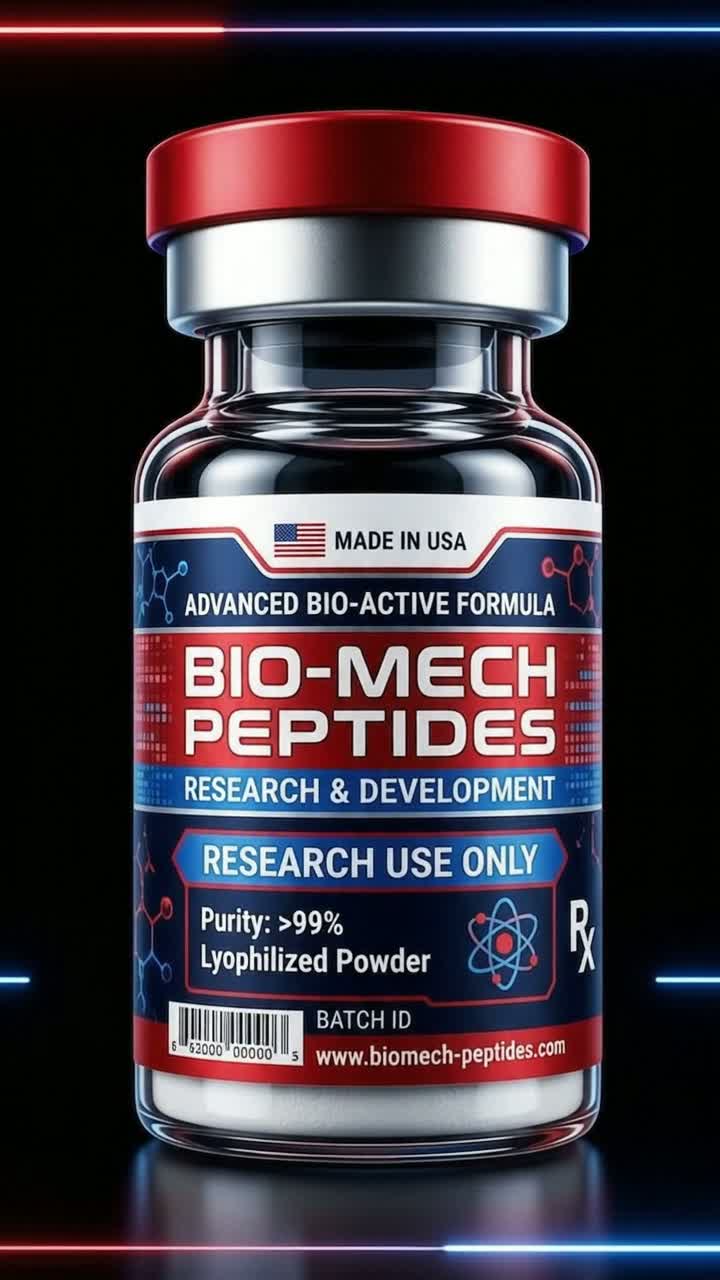
Daily keyword research · GHK-Cu research peptide
GHK-Cu Research Peptide: Beginner's Guide to Classification
Explore GHK-Cu as a research peptide. This guide covers its mechanistic classification and laboratory applications for informed researchers.
Reading this research reference
The information below concerns the research subject, not proof of the identity or performance of a supplied material. Check the original sources and your laboratory’s requirements; product documentation must be assessed separately for the exact batch.
Understanding GHK-Cu as a Research Peptide
GHK-Cu, or copper glycyl-L-histidyl-L-lysine, is a naturally occurring human tripeptide that has garnered significant attention in the scientific community for its diverse biological activities. As a research peptide, GHK-Cu is predominantly studied for its roles in tissue remodeling, antioxidant defense, and cellular repair mechanisms within *in vitro* and *in vivo* laboratory settings. Its classification often involves understanding its biochemical structure and its interaction with copper ions, which are pivotal to its functional profile. The peptide's small size, comprising three amino acids, facilitates its investigative utility in models examining protein-ligand interactions and cellular signaling pathways.
Mechanistic Classification of Peptides
Peptides are broadly classified based on their structure, origin, and, critically, their mechanism of action. This mechanistic classification provides a framework for understanding how different peptides exert their effects at a molecular level. For research purposes, this categorization is essential for designing experiments and interpreting results accurately. Common mechanistic categories include receptor agonists/antagonists, enzyme inhibitors/activators, antimicrobial agents, hormones, growth factors, and signaling molecules. The specific classification of a peptide often dictates the types of assays and models it is suitable for.
GHK-Cu's Mechanistic Profile
GHK-Cu is primarily classified as a signaling peptide and an antioxidant. Its capacity to bind copper ions firmly yet reversibly is central to its mechanism. In research, it is observed to chelate copper, facilitating its delivery to cells where copper acts as a cofactor for numerous essential enzymes. This interaction is crucial for processes such as collagen synthesis and antioxidant defense. Furthermore, GHK-Cu has been investigated for its modulatory effects on gene expression, impacting cellular proliferation and differentiation pathways. These multifaceted actions position GHK-Cu as a subject of interest in studies related to tissue regeneration and protective cellular responses.
Research Applications of GHK-Cu
In the laboratory, GHK-Cu is utilized across various research domains. Its role in wound healing models involves studies on collagen and glycosaminoglycan synthesis, and its potential to modulate inflammatory responses. Researchers also investigate its antioxidant properties by examining its ability to neutralize free radicals and upregulate antioxidant enzymes in cellular systems. Furthermore, GHK-Cu is explored for its effects on angiogenesis, the formation of new blood vessels, a critical process in tissue repair and disease progression. These applications underscore its value as a reference material for understanding fundamental biological processes. For a more detailed look at peptide classification, refer to our companion resource on [peptide-classification-mechanism-ghk-cu-research-2026-07-05](/peptide-classification-mechanism-ghk-cu-research-2026-07-05).
Storage and Handling of Research Peptides
Proper storage and handling are paramount for maintaining the integrity and activity of GHK-Cu and other research peptides. Peptides are typically supplied in lyophilized form and require reconstitution in a suitable solvent, often sterile water or a weak acid solution, before use. Long-term storage usually demands refrigeration or freezing, often at -20°C or -80°C, to prevent degradation. Repeated freeze-thaw cycles should be avoided as they can compromise peptide stability. Researchers must adhere to established laboratory protocols for sterile technique during handling to prevent contamination and ensure experimental reproducibility. The stability of GHK-Cu in solution is influenced by pH and temperature, necessitating careful consideration of experimental conditions.
Considerations for *In Vitro* Studies
When conducting *in vitro* studies with GHK-Cu, several factors warrant attention. The purity of the peptide is a critical determinant of experimental outcomes, and high-purity, laboratory-grade GHK-Cu should always be sourced. Concentration-response curves are often essential to determine optimal working concentrations that elicit physiological effects without inducing cytotoxicity. The choice of cell line or primary cell culture model should align with the research question, as cellular responses to GHK-Cu can vary significantly across different cell types. Comprehensive controls, including vehicle-only treatments, are indispensable for validating observed effects and attributing them directly to GHK-Cu administration.
Compliance and Ethical Guidelines for Research
All research involving GHK-Cu must adhere strictly to local and international ethical guidelines and regulatory frameworks. As a research-use-only product, GHK-Cu is not intended for human consumption or therapeutic applications. Researchers are obligated to ensure that experiments are designed and conducted responsibly, with a focus on scientific rigor and data integrity. Institutional Review Boards (IRBs) or equivalent ethical committees should approve all studies, particularly those involving animal models, to ensure humane treatment and justification of experimental procedures. Transparency in reporting methodologies and results is crucial for advancing scientific understanding while maintaining compliance.
---
**Educational Compliance Note:** Regena Peptides provides GHK-Cu exclusively for *in vitro* and *in vivo* laboratory research use. This product is not intended for human administration, diagnostic, or therapeutic purposes. Researchers are solely responsible for ensuring compliance with all applicable laws and regulations in the conduct of their studies. All information presented is for educational purposes only and does not constitute medical advice or claims regarding the safety or efficacy of GHK-Cu for any specific application.
Frequently asked questions
What is the primary mechanistic classification of GHK-Cu?+
GHK-Cu is primarily classified as a signaling peptide and an antioxidant, due to its roles in cellular communication and free radical neutralization.
How does GHK-Cu interact with copper in biological systems?+
GHK-Cu binds copper ions, forming a complex that facilitates the delivery of copper to cells, where it acts as a cofactor for various essential enzymes.
What are common research applications for GHK-Cu?+
GHK-Cu is commonly researched for its roles in tissue remodeling, antioxidant defense mechanisms, wound healing, and modulation of inflammatory responses.
Why is proper storage important for GHK-Cu research peptides?+
Proper storage, typically lyophilized and refrigerated/frozen, prevents degradation, maintains peptide integrity, and ensures the reliability and reproducibility of research findings.
Is GHK-Cu intended for human use?+
No, GHK-Cu is strictly for *in vitro* and *in vivo* laboratory research purposes only and is not intended for human consumption or therapeutic applications.
GHK-Cu on Bio Mech
Product details, batch documentation and support for the compound discussed above. Research use only.
Continue your research
Read the related blog article
Companion educational post
Explore the peptide library
Compound reference pages and COA links
Book a research consultation
Educational guidance for research planning
Search the knowledge base
Every research article, comparison and COA explainer
GHK-Cu Research Peptide: Properties & Classification Guide
Related research reference
HPLC Tested Peptides for Cognitive Research - Regena Peptides
Related research reference
HPLC Tested Peptides for Cognitive Research: Semax, Selank, DSIP
Related research reference
KPV Peptide Research: Mechanisms, Applications, and Synthesis
Related research reference
Lab Peptides Europe: Ensuring Purity with HPLC Verification
Related research reference
MOTS-c Research Peptide: Mitochondrial Dynamics & Metabolic Pathways
Related research reference
MOTS-c Peptide: In-vitro Research & Metabolic Pathways
Related research reference
Peptide Reconstitution Guide: Laboratory Protocols for Research
Related research reference
Peptide Storage Guide: Preservation for Laboratory Research
Related research reference
Peptide Storage Guide: Optimizing Research Compound Integrity
Related research reference
Order in 3 steps · tracked delivery
Order research peptides for your laboratory
Batch documentation is provided on request — no laboratory reports have yet been verified for publication against Bio Mech stock. Dispatch is tracked on every order; allow 5–18 business days once tracking is active. Supplied for in-vitro research use only.
- 1
Choose your compound
Browse the catalog or search for a specific reference standard.
- 2
Checkout in 2 minutes
Bank transfer or card — the full price is shown before you pay.
- 3
Tracked dispatch
Tracking on every order; 5–18 business days once tracking is active.
Most ordered this month
BPC-157
From €269.00
Ipamorelin
From €249.00
Bacteriostatic Water
From €149.00
- Research use only — not for human consumption
- Tracked delivery to the USA, UK, Europe and the Middle East
- Batch documentation available on request
Research materials · Order information
Research only
Not for human consumption
Documentation
Ask about the specific batch
Tracked parcels
5–18 business days
Tracked Delivery
5–18 business days
Pay with Wise, Revolut, Monzo, bunq or bank transfer
- Card via Wise
- Card via Revolut
- Bank Transfer