
·Educational reference
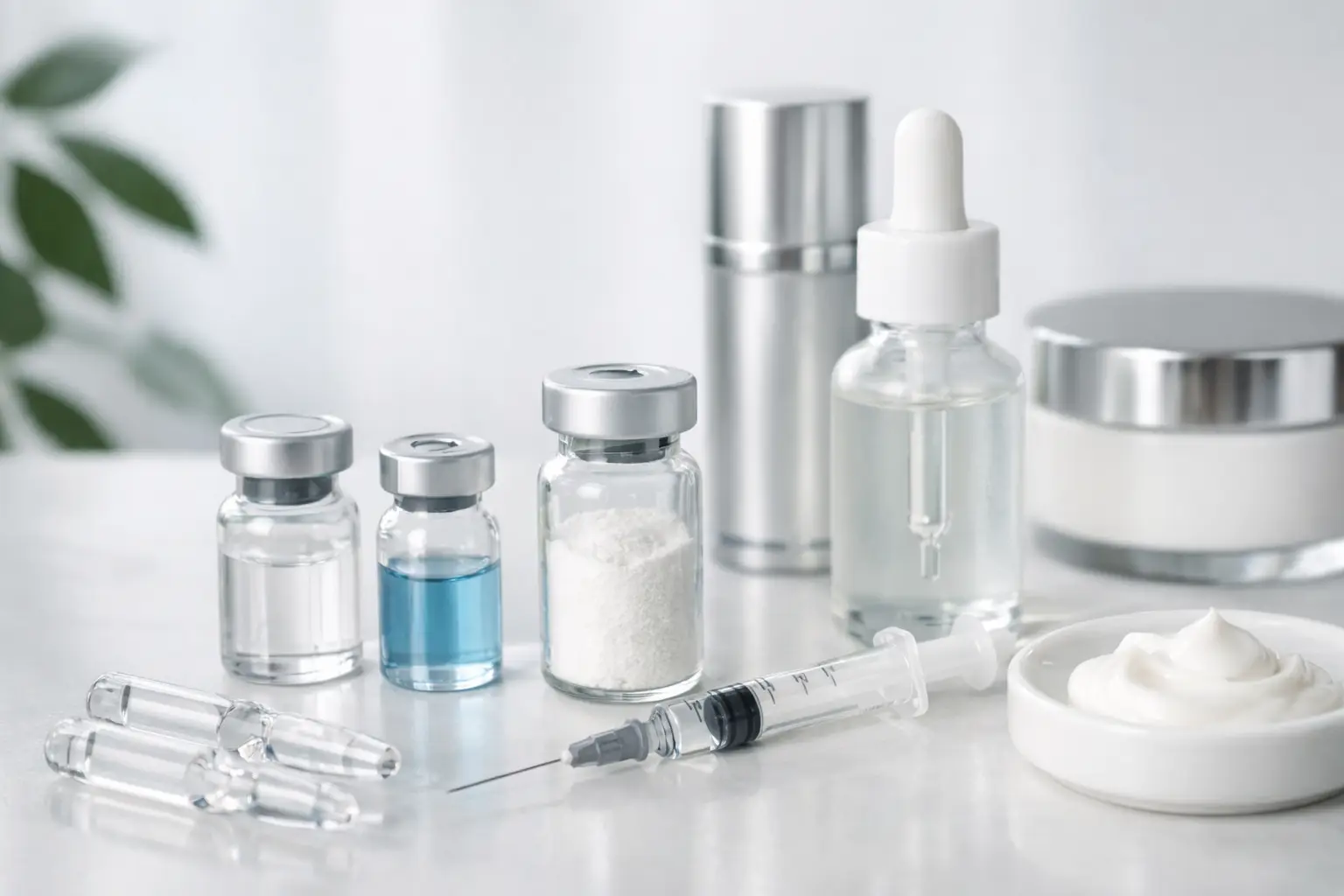
Lyophilised peptides, commonly referred to as freeze-dried peptides, are prevalent in various research settings due to their enhanced stability and extended shelf life compared to their solution-phase counterparts. However, once a lyophilised peptide is reconstituted, its stability significantly decreases. Therefore, understanding and implementing best practices for both reconstitution and subsequent storage is paramount for accurate and reliable research outcomes. This article details the essential steps and considerations for handling these sensitive research compounds in European laboratories and beyond.
## Selecting the Appropriate Solvent
Choosing the correct solvent for reconstitution is the first critical step. The optimal solvent depends primarily on the peptide's physicochemical properties, particularly its hydrophobicity and the intended application. For most hydrophilic peptides, sterile, deionised water is suitable. However, for hydrophobic peptides, a small amount of an organic solvent may be necessary to achieve complete dissolution before diluting with water or buffer. Common organic solvents include acetonitrile, dimethyl sulfoxide (DMSO), or dimethylformamide (DMF). It is important to use the minimum volume of organic solvent required, as these can denature peptides or interfere with downstream applications. Always consult the peptide's Certificate of Analysis (CoA) or supplier recommendations for specific solvent advice.
## Reconstitution Process
When reconstituting, ensure all materials are sterile and handled under aseptic conditions to prevent contamination. Allow the lyophilised peptide to reach room temperature before opening the vial to prevent condensation, which can introduce moisture. Slowly add the chosen solvent to the vial, directing it down the side of the vial to gently wash the peptide powder. Avoid directly pipetting onto the powder, which can cause aerosolisation and loss of material. Gently swirl the vial to mix; do not vigorously shake, as this can induce foaming and potentially damage the peptide. If the peptide does not dissolve immediately, allow it to sit at room temperature for a short period (e.g., 10-30 minutes) or gently agitate. Mild sonication in a water bath can be employed for recalcitrant peptides, but this should be done cautiously to avoid overheating.
## Concentration Considerations
The final concentration of the reconstituted peptide solution also influences its stability. Highly concentrated solutions often exhibit better stability than very dilute ones due to reduced adsorption to vial surfaces and decreased susceptibility to degradation pathways. However, very high concentrations can lead to aggregation, especially for hydrophobic peptides. A common practice is to reconstitute to a stock concentration that allows for convenient aliquoting and subsequent dilution to working concentrations. If the peptide is intended for cell-based assays, ensure the chosen reconstitution solvent and final concentration are non-toxic to the cells.
## Aliquoting for Long-Term Storage
Once reconstituted, peptides are far less stable than in their lyophilised form. To maximise stability and minimise freeze-thaw cycles, it is strongly recommended to aliquot the reconstituted peptide solution into smaller, single-use volumes. These aliquots should be stored in sterile, low-binding polypropylene tubes. This practice prevents degradation that can occur with repeated thawing and refreezing of the entire stock solution, a common issue in laboratories studying research compounds in Europe and globally.
## Storage Conditions
The optimal storage temperature for reconstituted peptide solutions is typically -20°C or, preferably, -80°C for long-term storage. Avoid storing at 4°C for extended periods, as this temperature is generally only suitable for short-term use (e.g., a few days). For peptides sensitive to oxidation, storage under an inert gas atmosphere (e.g., argon or nitrogen) can be beneficial. Light-sensitive peptides should be stored in amber vials or wrapped in aluminium foil to protect them from photodecomposition. Always clearly label each aliquot with the peptide name, concentration, date of reconstitution, and storage date.
## Freeze-Thaw Cycles
Repeated freeze-thaw cycles are a significant cause of peptide degradation, leading to aggregation, precipitation, and loss of biological activity. The process of freezing and thawing can create ice crystals that mechanically stress the peptide structure, while changes in pH and solute concentration during freezing can also contribute to instability. Adhering to the aliquoting strategy described above is the most effective way to mitigate the detrimental effects of freeze-thaw cycles.
## Conclusion
Adhering to meticulous reconstitution and storage protocols is important for maintaining the integrity, stability, and biological activity of lyophilised research peptides. Proper solvent selection, careful reconstitution technique, aliquoting, and appropriate storage temperatures significantly extend the useful life of these valuable research tools, ensuring reliable and reproducible experimental results. By following these guidelines, researchers can minimise peptide degradation and maximise the accuracy of their studies involving research compounds.
Educational reference only. These compounds are for *in-vitro* research use only.
Know someone who does lab research? Send them this page and earn a 3–30% affiliate commission based on your monthly referred sales.
Share & earn
Your personal share link
Post this link on your social media. Anyone you refer who places a paid order earns you a single-use 20% discount code through our referral program — it cannot be combined with another discount that is already active.
https://biomechpeptides.comA fresh code is generated every time this page loads, so each share is tracked separately.
Research disclaimer
This article is published for educational and scientific information purposes only. It does not constitute medical, veterinary, pharmaceutical, or professional advice and should not be used to diagnose, treat, cure, or prevent any condition. Bio Mech Peptides sells laboratory research materials only. Nothing on this site is a medicine, supplement, food or cosmetic, and nothing is sold for use in people or animals, whether to diagnose, treat or otherwise.
Related on Bio Mech Peptides
Popular research topics & products
Research topics
Popular products
Regional logistics
Not sure which peptide fits your research question?
Take the 60-second Find Your Peptides quiz — it points you to the most relevant reference compounds for your area of investigation.
Start the quizMore in Research Journal
2026-05-22
BPC-157 in Tissue-Repair Research: What the Literature Shows
2026-07-18
BPC-157 vs TB-500: A Comparative Research Guide
2026-05-06
Cagrilintide: Long-Acting Amylin Analogue in Metabolic Research
2026-05-15
Epitalon: The Pineal Peptide in Longevity Research
2026-05-17
GHK-Cu: The Copper Peptide in Cosmetic and Skin-Biology Research
2026-07-15