
Regenerative Research
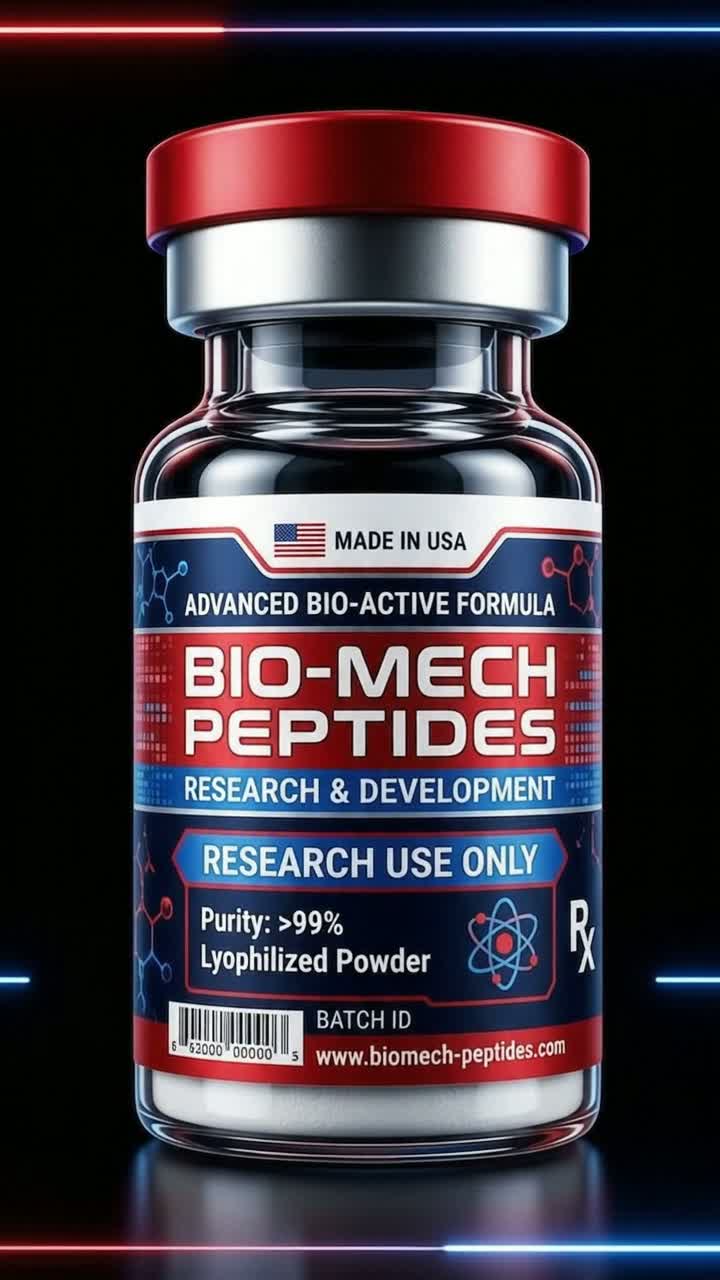
HPLC ≥99% Purity: What the Number Actually Means
·Educational reference
High-performance liquid chromatography (HPLC) is the standard analytical technique used to quantify the purity of a research peptide. In an HPLC run, the reconstituted sample is passed through a stationary phase under high pressure; components separate based on their interaction with the column, and a detector (typically UV at 214 nm or 220 nm for peptide bonds) produces a chromatogram of peaks. The area of the main peak, divided by the total peak area, is reported as the percent purity.
A ≥99 % HPLC purity threshold is the working standard for most published peptide-research protocols. For long or synthetically challenging sequences, ≥98 % is sometimes acceptable, but the deviation should be disclosed on the COA.
Reading a COA: look for the analytical method (HPLC-UV, HPLC-MS), the column and gradient conditions, the retention time of the main peak, and the reported percent purity. Alongside HPLC, a mass-spectrometry line should confirm the molecular weight matches the theoretical value for the sequence. Together, these two lines establish both purity and identity — one without the other is insufficient.
Common contaminants to note include residual trifluoroacetic acid (TFA) from synthesis, acetate counter-ions, and endotoxin (relevant for cell-based work). A well-documented COA lists water content, residual solvents and, where applicable, endotoxin level.
Batch-to-batch reproducibility is the practical reason laboratories prefer suppliers that publish per-batch COAs rather than a single generic specification sheet. Two vials of the same peptide from different lots can differ by fractions of a percent in main-peak area; documenting the exact batch used in a study supports reproducibility if the work is later re-run or cited.
This article is intended as an educational reference on peptide analytical standards for laboratory researchers and does not describe human use.
Know someone who does lab research? Send them this page and earn a 3–30% affiliate commission based on your monthly referred sales.
Not sure which peptide fits your research question?
Take the 60-second Find Your Peptides quiz — it points you to the most relevant reference compounds for your area of investigation.
Start the quizMore in Regenerative Research
2026-07-18
BPC-157 vs TB-500: A Comparative Research Guide
2026-07-17
Peptide Reconstitution: A Laboratory Reconstitution Guide
2026-07-14
Cold-Chain Storage for Research Peptides: A Practical Bench Guide
2026-05-21
Ipamorelin and CJC-1295: Growth Hormone Secretagogue Research
2026-05-08
KPV: The α-MSH-Derived Tripeptide in Inflammatory Research
2026-05-12