
·Educational reference
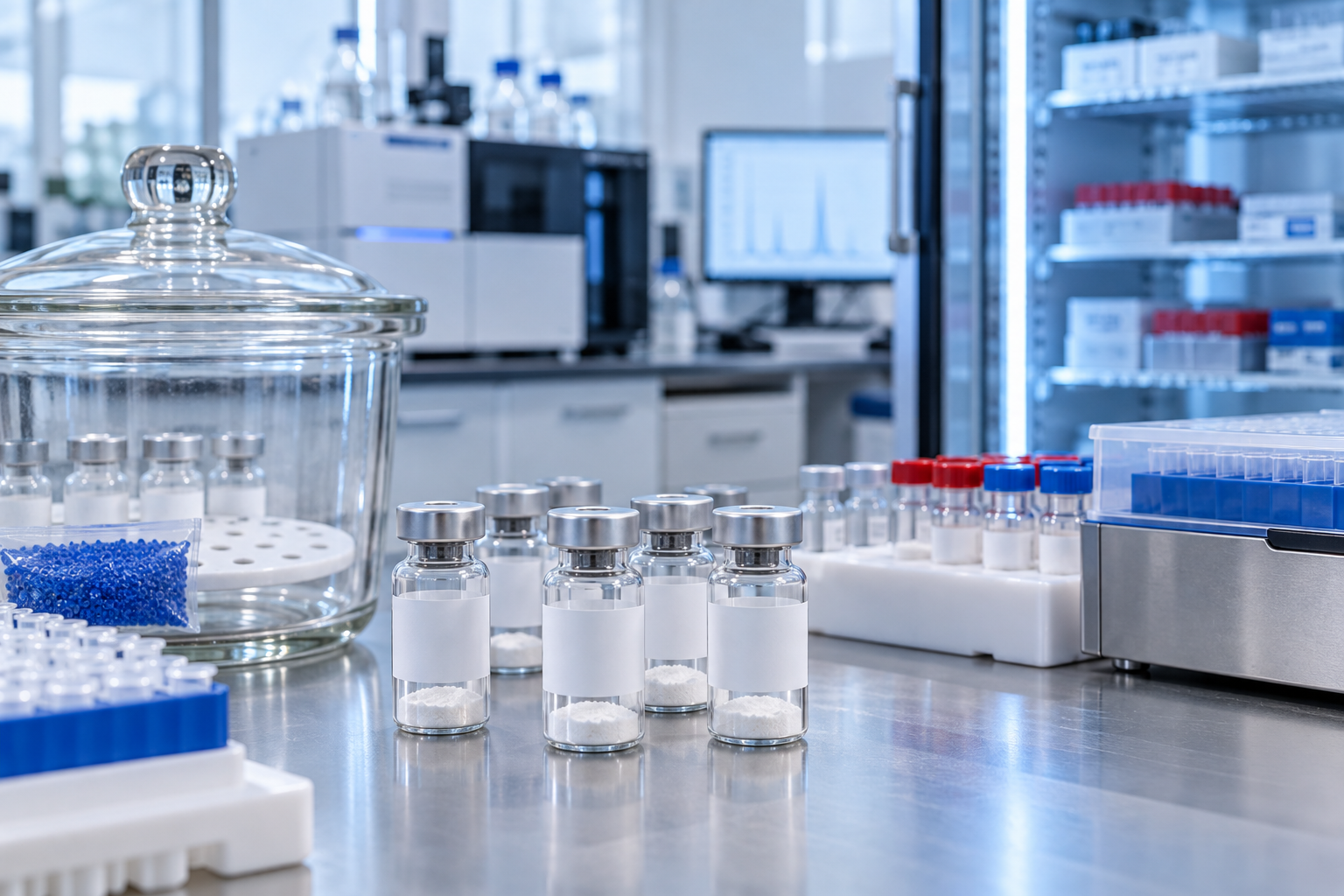
Ipamorelin is a synthetic pentapeptide extensively evaluated in preclinical literature for its selective affinity toward the growth hormone secretagogue receptor (GHS-R1a). In research models, this pentapeptide (Aib-His-D-2-Nal-D-Phe-Lys-NH2) has offered investigators an attractive alternative to first-generation secretagogues due to its high selectivity and lack of significant stimulatory effects on adrenocorticotropic hormone or prolactin. However, maintaining the integrity of Ipamorelin throughout consecutive experimental assays requires strict adherence to standardized handling and storage methodologies. Peptides are intrinsically prone to chemical and physical degradation, and even subtle deviations in laboratory environment or handling technique can compromise experimental validity.
The Dynamics of Lyophilisation and Solid-State Stability
Peptide synthesis concludes with purification and subsequent freeze-drying, yielding a solid cake or lyophilised powder. Lyophilisation removes water through sublimation, significantly retarding hydrolytic cleavage pathways that typically degrade peptides in solution. In its solid lyophilised state, Ipamorelin exhibits robust structural stability when protected from ambient moisture, elevated temperatures, and direct ultraviolet irradiation.
Moisture represents the primary vector of solid-state degradation. When a sealed vial is exposed to temperature swings, hygroscopic absorption can initiate hydrolysis, leading to deamidation or peptide fragmentation. Consequently, unopened vials of lyophilised peptides should be kept in a desiccated environment at sub-zero temperatures. For medium-term experimental schedules extending up to several months, storage at -20°C is generally sufficient. For long-term archiving spanning a year or more, maintaining stock vials at -80°C preserves structural integrity with minimal degradation, a principle shared across diverse research targets in our full research peptide catalogue.
Preparation and Reconstitution Protocols
Transitioning Ipamorelin from a solid powder to a working liquid solution represents the phase of highest vulnerability in the laboratory workflow. Temperature equilibration is an essential first step. Removing a frozen vial and immediately opening it invites atmospheric condensation to form on the cold surface of the lyophilised powder, introducing uncontrolled water content. Vials must sit at room temperature inside a sealed desiccator for at least 20 to 30 minutes prior to septal puncture or cap removal.
When preparing working solutions, investigators commonly choose between sterile bacteriostatic water, sterile deionized water, or specific laboratory buffers depending on the downstream assay requirements. The chosen solvent should be introduced smoothly down the inner glass wall of the vial rather than sprayed directly onto the lyophilised cake. Vigorous agitation, such as vortexing, induces shear stress that can disrupt secondary structures or provoke peptide aggregation. Instead, researchers should gently swirl the vial or roll it horizontally until the cake dissolves completely into a clear, uniform solution.
These reconstitution parameters parallel the care required when dissolving complex compounds such as melanotan i or cyclic peptide sequences like pt 141, where preserving conformational integrity is critical for obtaining consistent binding data.
Handling Solutions and Minimizing Freeze-Thaw Cycles
Once dissolved, Ipamorelin is substantially more susceptible to hydrolytic cleavage, terminal oxidation, and microbial breakdown than in its dried state. While secretagogues such as hexarelin and short bioregulatory sequences like Cartalax vary slightly in their solution half-lives due to unique amino acid arrangements, no peptide solution remains completely impervious to degradation at ambient temperatures.
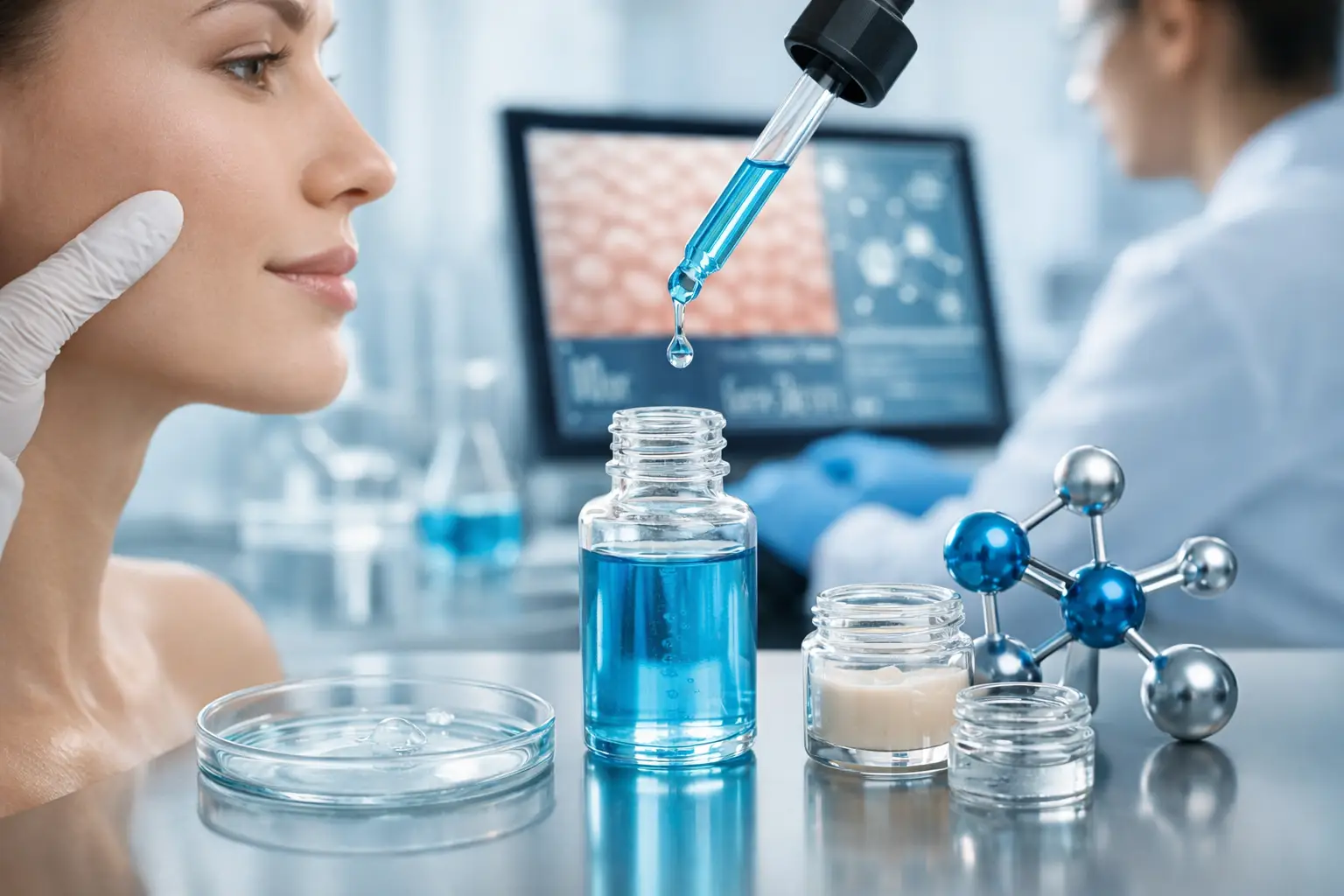
To safeguard reconstituted Ipamorelin, laboratories should observe the following best practices:
- Aliquoting: Subdivide reconstituted peptide stock into single-use microcentrifuge tubes immediately following initial solubilization. This avoids repetitive freeze-thaw cycles, which subject peptide bonds to mechanical strain as water crystals expand and contract.
- Temperature Control: Working aliquots scheduled for use within 24 to 48 hours should be kept at 2°C to 8°C. Aliquots reserved for subsequent experimental blocks should be flash-frozen and transferred directly to -20°C or -80°C.
- Container Selection: Utilize low-binding polypropylene or specialized inert plastics to prevent non-specific peptide adherence to container walls, which can skew calculated experimental concentrations.
- Light Shielding: Store aliquots in amber vials or dark storage boxes, as continuous exposure to ambient laboratory lighting can accelerate photo-oxidation of vulnerable residues.
These protective steps are equally critical when working with sensitive tissue-signaling peptides like MGF or complex senolytic molecules such as FOXO4-DRI, where aggregate formation or chain cleavage directly impacts receptor kinetics in laboratory models.
Analytical Verification and Quality Assurance
Even with meticulous laboratory stewardship, baseline purity determines the ceiling of experimental repeatability. High-performance liquid chromatography (HPLC) and mass spectrometry (MS) remain the gold standards for verifying sequence identity, molecular mass, and absence of synthesis residuals. Before incorporating any batch into ongoing cellular or animal models, investigators should verify analytical data via our dedicated lab report (COA) search, ensuring that purity thresholds meet or exceed institutional standards.
Elevate Your Laboratory Research with Bio Mech Peptides
Bio Mech Peptides is dedicated to supplying academic institutions, private biotechnology laboratories, and independent investigators with reference-grade research peptides. Our streamlined global supply chain ensures that products arrive swiftly and securely with cold-chain stability intact, serving research teams across the United States, the United Kingdom, and the European Union, including specialized shipments to regional hubs such as Almería, as well as international destinations such as Cambodia. Explore our comprehensive collection and secure high-grade research kits designed to deliver absolute precision in every assay.
Want to take this further in the lab? You can see delivery details for research peptides in Italy. All products are for laboratory research use only.
All compounds described are strictly for in vitro laboratory research and animal experimental models, and are not for human consumption, clinical application, or diagnostic use.
Know someone who does lab research? Send them this page and earn a 3–30% affiliate commission based on your monthly referred sales.
Share & earn
Your personal share link
Post this link on your social media. Anyone you refer who places a paid order earns you a single-use 20% discount code through our referral program — it cannot be combined with another discount that is already active.
https://biomechpeptides.comA fresh code is generated every time this page loads, so each share is tracked separately.
Research disclaimer
This article is published for educational and scientific information purposes only. It does not constitute medical, veterinary, pharmaceutical, or professional advice and should not be used to diagnose, treat, cure, or prevent any condition. Bio Mech Peptides sells laboratory research materials only. Nothing on this site is a medicine, supplement, food or cosmetic, and nothing is sold for use in people or animals, whether to diagnose, treat or otherwise.
Related on Bio Mech Peptides
Compounds discussed in this article
Ipamorelin
In stock
Hexarelin
In stock
View cart · For in-vitro research use only.
Reconstitution supplies (optional)
Sold separately and never added automatically. Solvent choice depends on the compound — check its COA or handling sheet before choosing.
Not sure which peptide fits your research question?
Take the 60-second Find Your Peptides quiz — it points you to the most relevant reference compounds for your area of investigation.
Start the quizMore in Research Journal
2026-05-22
BPC-157 in Tissue-Repair Research: What the Literature Shows
2026-07-18
BPC-157 vs TB-500: A Comparative Research Guide
2026-05-06
Cagrilintide: Long-Acting Amylin Analogue in Metabolic Research
2026-05-15
Epitalon: The Pineal Peptide in Longevity Research
2026-05-17
GHK-Cu: The Copper Peptide in Cosmetic and Skin-Biology Research
2026-07-15