
·Educational reference

BPC-157, or Body Protection Compound-157, is a synthetic peptide that has garnered significant attention in the fields of regenerative medicine and tissue repair research. This peptide is a partial sequence of human gastric juice protein BPC, comprising 15 amino acids (Gly-Glu-Pro-Pro-Pro-Gly-Lys-Pro-Ala-Asp-Asp-Ala-Gly-Leu-Val). Its solid stability in gastric acid—a critical characteristic of its parent protein—allows it to maintain its structure and function even within the harsh environments of the digestive tract.
## Origin and Structure of BPC-157
The initial isolation and characterization of BPC-157 stemmed from research into factors active in the human body that exhibit cytoprotective properties. The native Body Protection Compound is naturally present in gastric juice, where it plays a role in maintaining the integrity of the gastrointestinal mucosa. The synthetic BPC-157 peptide was designed to mimic and potentially enhance these protective and regenerative actions. Its small size contributes to its physicochemical stability and allows for diverse avenues of research administration in experimental settings. Understanding its origin provides context for its studied mechanisms of action, particularly in areas related to tissue healing and inflammatory response modulation.
## Mechanisms Under Investigation
Research into BPC-157's mechanisms of action suggests a multifaceted approach to tissue regeneration. In various in-vitro and in-vivo models, BPC-157 has been observed to influence several key biological processes. One prominent area of study involves its angiogenic potential, where it appears to promote the formation of new blood vessels. This effect is considered important for healing, as adequate blood supply is essential for nutrient delivery and waste removal from damaged tissues. Literature suggests that BPC-157 may modulate growth factors, such as vascular endothelial growth factor (VEGF), which are central to angiogenesis.
Another significant area of research focuses on its anti-inflammatory properties. Studies have indicated that BPC-157 may attenuate inflammatory responses in various injury models, which can reduce tissue damage and facilitate more effective healing. Its potential to modulate cytokine expression and other inflammatory mediators is a subject of ongoing investigation. Also, researchers are exploring its fibrolytic effects, wherein it may support the degradation of scar tissue, potentially leading to more functional tissue repair rather than fibrotic scarring. The modulation of collagen synthesis and organization is another avenue of inquiry.
In neuromuscular contexts, preclinical studies have suggested that BPC-157 might facilitate nerve regeneration and functional recovery following injury. This is an area of intense interest, given the clinical challenges associated with peripheral nerve damage. Its potential to interact with growth hormone receptors or directly influence cellular pathways relevant to nerve repair is being explored. The observed acceleration of wound healing in various tissue types—including skin, muscle, bone, and gastrointestinal mucosa—underscores its broad regenerative potential in research models.
## Research Applications and Future Directions
The diverse biological activities attributed to BPC-157 have led to its exploration in a wide array of research models addressing various forms of injury and disease. In orthopaedic research, it has been studied for its potential to accelerate the healing of fractures, tendon, and ligament injuries. Its pro-angiogenic and anti-inflammatory effects are considered particularly beneficial in these contexts. Gastrointestinal research has naturally focused on its cytoprotective properties, investigating its role in protecting and healing the gut lining from damage induced by various stressors, including NSAIDs and inflammatory conditions.
Beyond these areas, BPC-157 is also being investigated in models of central nervous system injury, cardiovascular damage, and even metabolic disorders, though these fields are less explored. The solid safety profile observed in many preclinical studies makes it an attractive candidate for further mechanistic investigations. Future research aims to fully elucidate the complex cellular and molecular pathways through which BPC-157 exerts its effects, potentially uncovering novel therapeutic targets and informing the development of new regenerative strategies. Its high stability and systemic activity are qualities that continue to intrigue researchers, prompting further exploration into its thorough biological impact. This peptide continues to be a subject of intense scientific scrutiny, with ongoing studies across numerous disciplines striving to understand its full potential and limitations.
Educational reference only. For in-vitro research use only.
Know someone who does lab research? Send them this page and earn a 3–30% affiliate commission based on your monthly referred sales.
Share & earn
Your personal share link
Post this link on your social media. Anyone you refer who places a paid order earns you a single-use 20% discount code through our referral program — it cannot be combined with another discount that is already active.
https://biomechpeptides.comA fresh code is generated every time this page loads, so each share is tracked separately.
Research disclaimer
This article is published for educational and scientific information purposes only. It does not constitute medical, veterinary, pharmaceutical, or professional advice and should not be used to diagnose, treat, cure, or prevent any condition. Bio Mech Peptides sells laboratory research materials only. Nothing on this site is a medicine, supplement, food or cosmetic, and nothing is sold for use in people or animals, whether to diagnose, treat or otherwise.
Related on Bio Mech Peptides
Related analytical reports
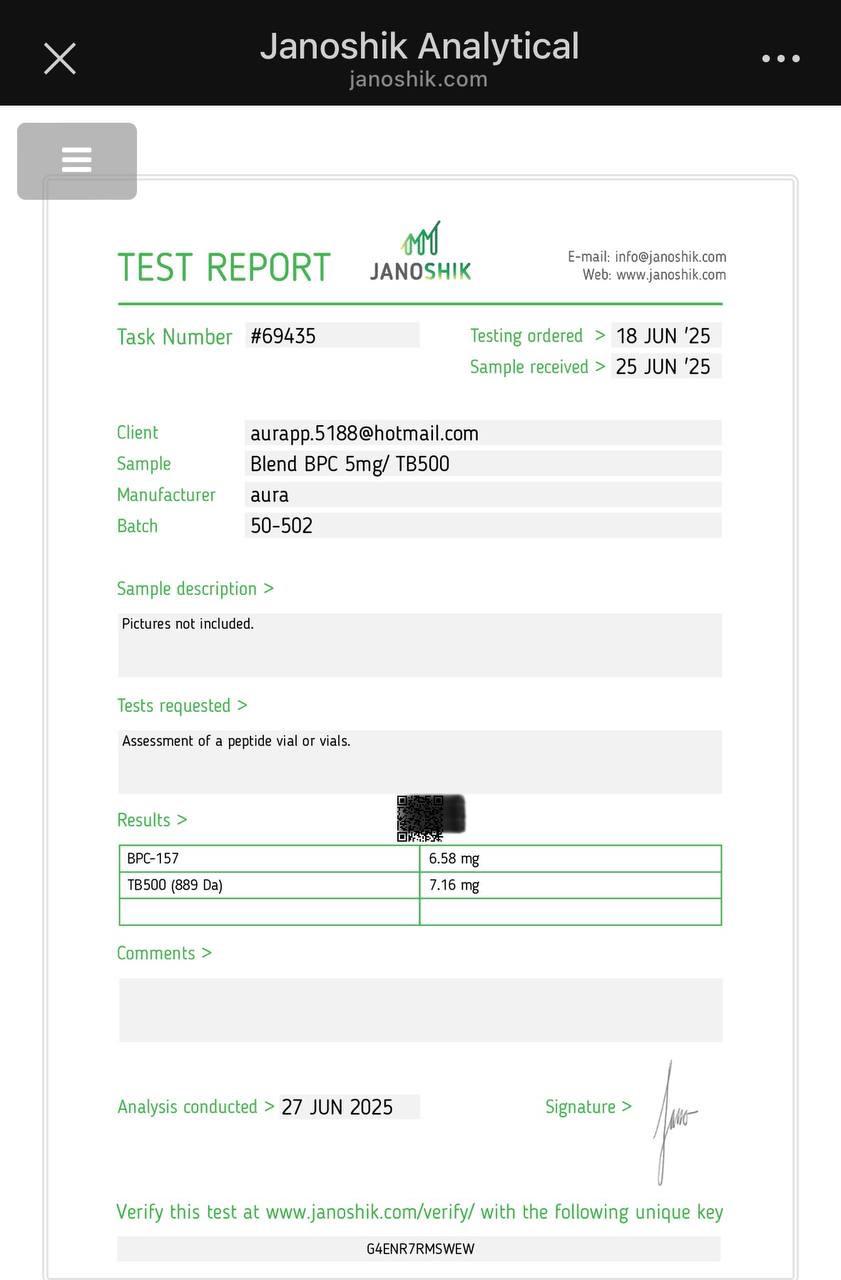
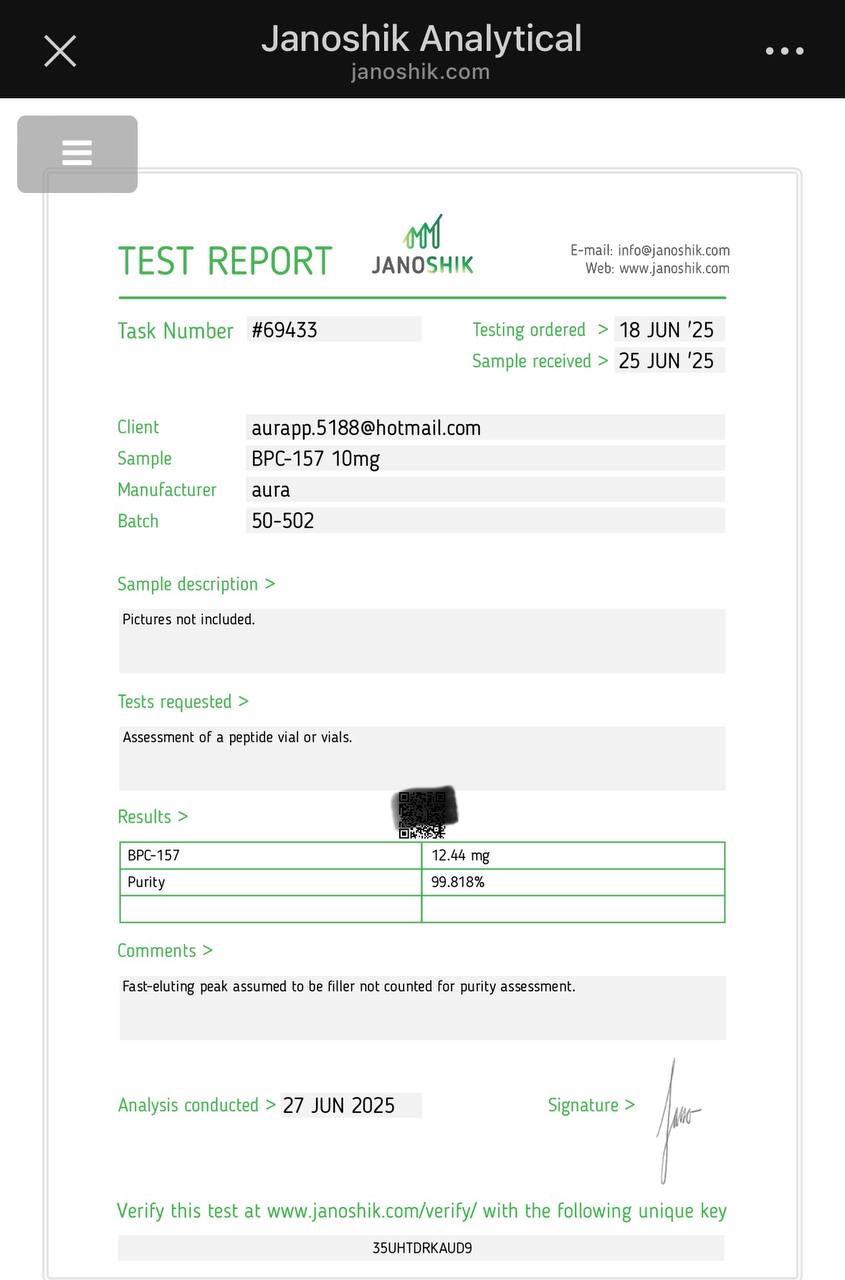
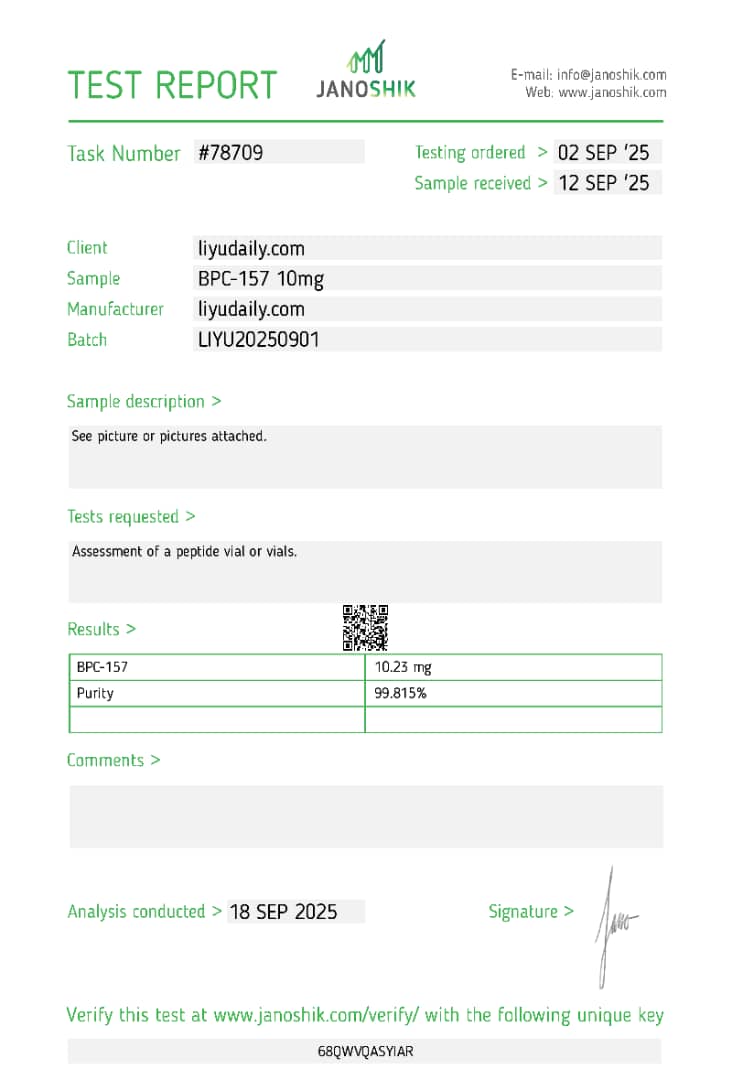
These saved Janoshik reports describe their named samples, suppliers and production lots, not automatically current stock. Confirm both supplier and batch before relying on a report.
Popular research topics & products
Research topics
Popular products
Regional logistics
Compound discussed in this article
BPC-157
In stock
View cart · For in-vitro research use only.
Reconstitution supplies (optional)
Sold separately and never added automatically.
Not sure which peptide fits your research question?
Take the 60-second Find Your Peptides quiz — it points you to the most relevant reference compounds for your area of investigation.
Start the quizMore in Research Journal
2026-05-22
BPC-157 in Tissue-Repair Research: What the Literature Shows
2026-07-18
BPC-157 vs TB-500: A Comparative Research Guide
2026-05-06
Cagrilintide: Long-Acting Amylin Analogue in Metabolic Research
2026-05-15
Epitalon: The Pineal Peptide in Longevity Research
2026-05-17
GHK-Cu: The Copper Peptide in Cosmetic and Skin-Biology Research
2026-07-15