
·Educational reference
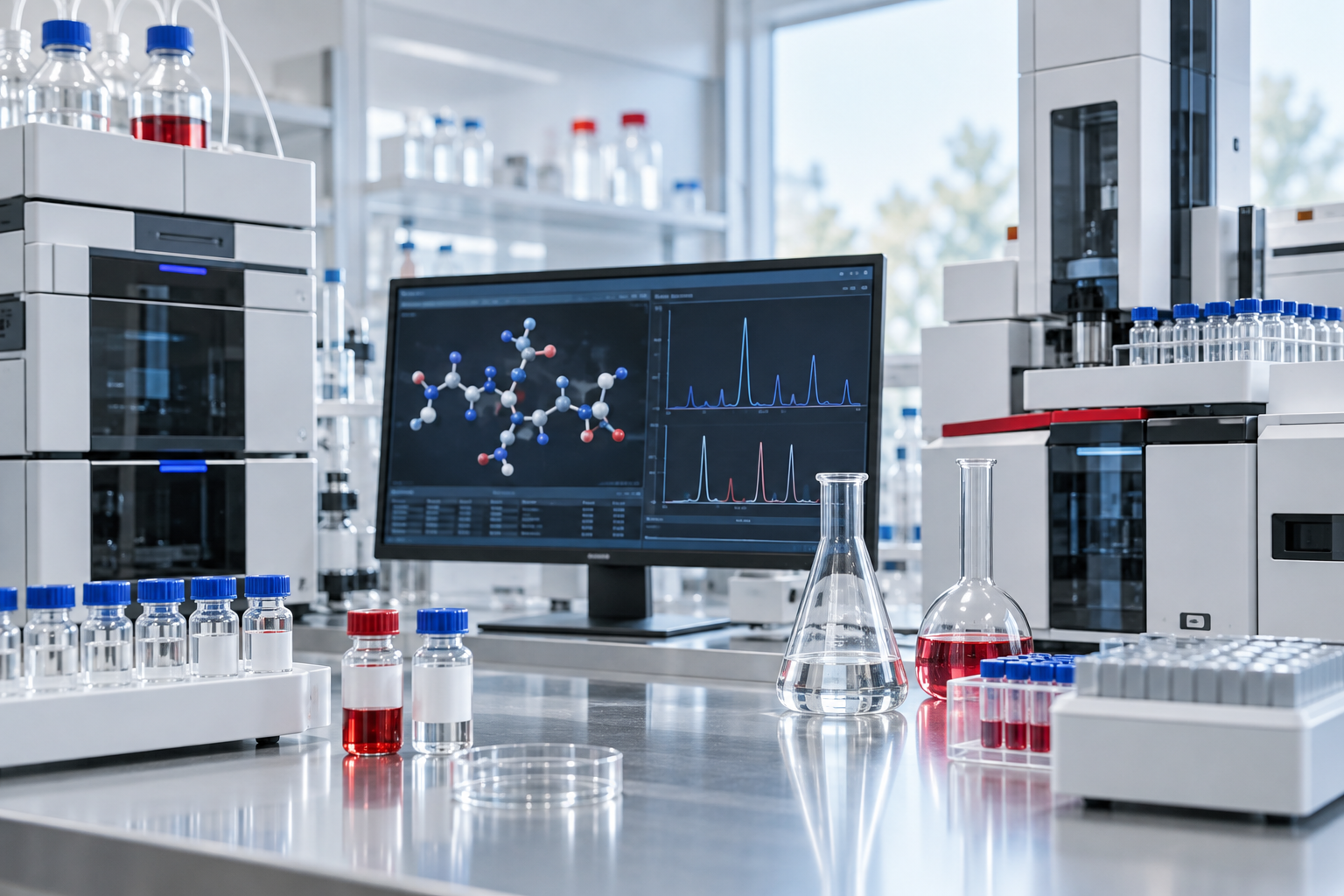
In neurobiology and peptide science, the investigation of synaptogenic compounds has long represented a critical frontier. Among the diverse array of synthetic oligopeptides synthesized over the past three decades, few have generated as much academic curiosity as Dihexa. Originally conceived through the systematic modification of endogenous peptide fragments, this oligopeptide derivative has become a primary subject for investigating synaptic connectivity, receptor dimerization, and cellular growth pathways in laboratory models.
The Early Origins: Angiotensin IV and Cognitive Research
The genesis of Dihexa traces back to the early 1990s at Washington State University, where research groups led by Dr. Joseph Harding and Dr. John Wright were investigating the non-cardiovascular actions of the renin-angiotensin system. While classical angiotensin peptides were known for their vascular and endocrine roles, scientific interest shifted when researchers identified high-affinity binding sites for angiotensin IV (Ang IV)—a hexapeptide degradation product of angiotensin II—in the hippocampus, neocortex, and cerebellum of mammalian brains.
Published studies examined how Ang IV fragments influenced memory facilitation and long-term potentiation in rodent models. However, standard Ang IV presented a severe limitation common to native regulatory peptides: an exceptionally short metabolic half-life. Rapid enzymatic degradation by ubiquitous aminopeptidases rendered native Ang IV unstable in biological assays, with a functional half-life measured in mere minutes. Also, native Ang IV exhibited limited capacity to cross physiological lipid barriers in research settings.
From Peptide Fragment to Stable Peptidomimetic
Recognizing the mechanistic potential of the target pathway, synthetic chemists set out to design analogs that retained or exceeded the biological activity of native Ang IV while exhibiting superior pharmacokinetic stability. Over several years, investigators evaluated hundreds of structural modifications, altering the N-terminus, peptide backbone, and side chains.
This iterative process culminated in the synthesis of N-hexanoic-Tyr-Ile-(6) aminohexanoic amide, structurally classified as a modified peptide-like oligomer, later designated as Dihexa. By introducing a hexanoic acid acyl group at the N-terminus and an aminohexanoic amide modification at the C-terminus, the molecule gained resistance to classic proteolytic cleavage while preserving the critical side-chain orientations required for target interaction. In stability trials, Dihexa demonstrated remarkable resilience against standard enzymatic degradation compared to its ancestral peptide counterparts.
Elucidating the Molecular Target: The HGF/c-Met Axis
For several years, researchers operated under the working hypothesis that Dihexa acted via the putative AT4 receptor. However, subsequent molecular pharmacology studies delivered an unexpected revelation: the target was not a classic G-protein coupled receptor, but rather the hepatocyte growth factor (HGF) and its receptor tyrosine kinase, c-Met.
Published investigations revealed that Dihexa acts as a potent potentiator of the HGF/c-Met system. In cell culture assays, researchers demonstrated that Dihexa binds with high affinity to HGF, facilitating receptor dimerization and downstream autophosphorylation of c-Met even in the presence of sub-threshold concentrations of endogenous ligand. The activation of this pathway triggers well-characterized intracellular cascades, including:
- The MAPK/ERK Pathway: Central to transcriptional regulation, cellular differentiation, and structural remodeling.
- The PI3K/Akt Axis: Associated with cellular survival, metabolic maintenance, and cytoskeletal dynamics.
- Dendritic Spine Genesis: In vitro experiments utilizing primary hippocampal cultures demonstrated profound increases in dendritic arborization and functional synapse density.
These findings established Dihexa not merely as a modified fragment of the renin-angiotensin cascade, but as an advanced tool for exploring growth factor signaling and structural plasticity in vitro.

Dihexa in the Broader Peptide Research Landscape
The discovery of Dihexa helped catalyze broader exploration into synthetic compounds capable of modulating cellular repair pathways. In comparative cellular literature, investigators often contextualize growth factor modulators alongside other functional peptide classes. For example, tissue repair models frequently evaluate signaling cascades examined in our research guide: bpc 157 vs tb 500, or observe matrix reorganization pathways detailed in our research guide: ghk cu.
Similarly, researchers interested in neurotrophic and metabolic cascades frequently cross-reference receptor-mediated pathways. While Dihexa operates primarily through the HGF/c-Met axis, other synthetic peptides modulate distinct upstream endocrine pathways. Scientists investigating cellular expansion models frequently integrate truncated growth factor analogs such as IGF-DES or explore growth hormone secretagogue receptor signaling with compounds like GHRP-2. For complex protocols studying divergent neuroendocrine mechanisms, research literature often compares peptide secretagogues against synthetic non-peptide ligands, as reviewed in our research guide: cjc 1295 vs mk 677, or explores multi-peptide formulations like the KLOW Blend.
Current Directions in Laboratory Investigation
Today, Dihexa remains an active subject of inquiry across academic institutions worldwide. Current research centers on understanding how c-Met activation influences neuroinflammation, neuroprotection against neurotoxic insults, and synaptic recovery in models of cellular trauma. Because synaptogenesis is fundamental to neuronal circuit repair, Dihexa serves as a standard reference compound when investigating how pharmacological agents facilitate dendritic spine rebuilding.
Ensuring experimental validity in these complex assays requires compounds of uncompromising chemical integrity. Researchers demanding rigorous verification can utilize our lab report (COA) search to verify HPLC and mass spectrometry data for every production batch. Bio Mech Peptides supplies research institutions internationally, ensuring reliable logistics whether sourcing research peptides delivered to Netherlands facilities or securing research peptides delivered to Bulgaria and across the European Union.
Acquiring Research-Grade Dihexa
To advance your laboratory's cellular signaling and synaptogenesis models, explore the high-purity offering on our dedicated Dihexa product page. Bio Mech Peptides maintains an extensive portfolio of analytical-grade compounds, and we invite investigators to inspect our full research peptide catalogue to support diverse experimental protocols.
Want to take this further in the lab? You can compare Lemon Bottle research kits and Adamax research kits, or see delivery details for research peptides in United States. All products are for laboratory research use only.
All compounds supplied by Bio Mech Peptides are strictly for laboratory research use only and are not intended for human consumption or therapeutic administration.
Know someone who does lab research? Send them this page and earn a 3–30% affiliate commission based on your monthly referred sales.
Share & earn
Your personal share link
Post this link on your social media. Anyone you refer who places a paid order earns you a single-use 20% discount code through our referral program — it cannot be combined with another discount that is already active.
https://biomechpeptides.comA fresh code is generated every time this page loads, so each share is tracked separately.
Research disclaimer
This article is published for educational and scientific information purposes only. It does not constitute medical, veterinary, pharmaceutical, or professional advice and should not be used to diagnose, treat, cure, or prevent any condition. Bio Mech Peptides sells laboratory research materials only. Nothing on this site is a medicine, supplement, food or cosmetic, and nothing is sold for use in people or animals, whether to diagnose, treat or otherwise.
Related on Bio Mech Peptides
Popular research topics & products
Research topics
Popular products
Regional logistics
Compounds discussed in this article
View cart · For in-vitro research use only.
Reconstitution supplies (optional)
Sold separately and never added automatically. Solvent choice depends on the compound — check its COA or handling sheet before choosing.
Not sure which peptide fits your research question?
Take the 60-second Find Your Peptides quiz — it points you to the most relevant reference compounds for your area of investigation.
Start the quizMore in Research Journal
2026-05-22
BPC-157 in Tissue-Repair Research: What the Literature Shows
2026-07-18
BPC-157 vs TB-500: A Comparative Research Guide
2026-05-06
Cagrilintide: Long-Acting Amylin Analogue in Metabolic Research
2026-05-15
Epitalon: The Pineal Peptide in Longevity Research
2026-05-17
GHK-Cu: The Copper Peptide in Cosmetic and Skin-Biology Research
2026-07-15